

Nepal Currency and Money Tips 2026: The Ultimate Financial Guide
Planning a trip to the Himalayas involves more than just booking flights; it requires smart financial logistics. One of the most common stressors for travelers is managing Nepal currency and money tips—specifically regarding ATM limits, credit card acceptance, and the ever-changing rules for Indian Rupees.
As of January 2026, regulations have shifted. At Travel Agent Nepal, we keep our clients ahead of the curve. Here is everything you need to know to keep your wallet safe and your trip smooth.
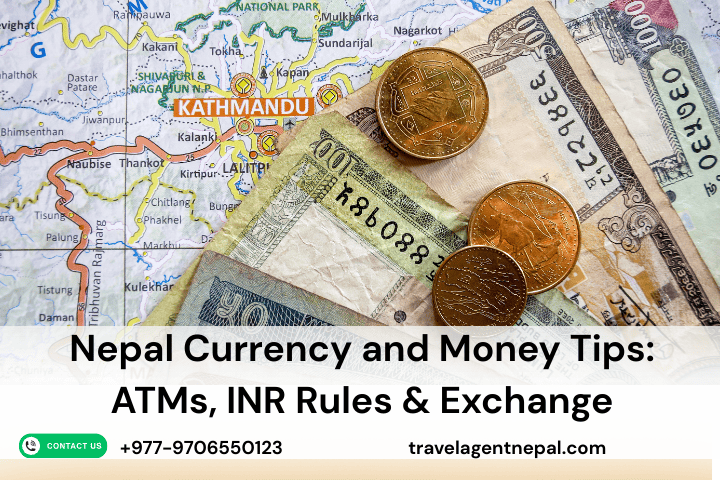
The Basics: The Nepalese Rupee (NPR)
The official currency is the Nepalese Rupee (NPR).
- Symbol: Rs or रू
- Notes: 5, 10, 20, 50, 100, 500, and 1000.
- Coins: Rarely used in tourism.
Pro Tip: Always hoard Rs 50 and Rs 100 notes. These are “gold” in the mountains for buying tea, charging phones, or tipping porters where merchants rarely have change for Rs 1000 notes.
2026 Update: The Indian Rupee (INR) Situation
For years, high-denomination Indian notes were strictly banned. This changed in late 2025.
While Indian currency is widely accepted as legal tender in Nepal, confusion remains. Here is the current rule:
- INR 100 Notes & Below: Freely accepted everywhere.
- INR 200 & INR 500 Notes: Now legal for Indian nationals to carry, but capped at ₹25,000 per person.
- Usage Advice: While legally allowed, many remote teahouses are still hesitant to accept ₹500 notes due to old habits. We recommend carrying INR 100 denominations or exchanging for NPR to ensure hassle-free transactions.
Cash vs. Credit Card: The Trekking Reality
A major misconception is that digital payments work everywhere. They do not.
Where Credit Cards Work
- Kathmandu & Pokhara: Hotels, upscale restaurants, and major shops accept Visa/Mastercard.
- The Cost: Expect a 3% to 4% surcharge on all card transactions. This is standard bank policy in Nepal.
Where Cash is King
- Trekking Regions: Once you leave the city (Lukla, Manang, Namche Bazaar), credit cards are virtually useless.
- Permits: While some counters accept cards, systems often go offline. Cash is safer.
- Visa Fees: The visa on arrival fee at Tribhuvan International Airport must be paid in cash (USD, EUR, AUD, or GBP) to avoid long queues at the currency exchange desk.
ATM Withdrawal Limits in Nepal
Don’t rely on withdrawing your entire trekking budget in one go. Nepal’s banking infrastructure has specific limits for foreign cards.
| Bank Type | Max Limit Per Transaction | Flat Fee Per Transaction |
| Standard Chartered / Nabil Bank | NPR 35,000 | NPR 500 – 700 |
| Himalayan Bank | NPR 30,000 | NPR 500 |
| Most Other Local Banks | NPR 10,000 – 20,000 | NPR 400 – 500 |
- Strategy: If you need NPR 100,000, you will likely need to make 3-4 separate transactions, incurring the fee each time. Notify your home bank before travel to prevent fraud blocks.
Budgeting for Your Trip
How much cash should you carry? Even if you have booked one of our all-inclusive tour packages, you will need pocket money.
- Budget Trekkers: NPR 3,000 – 4,000 per day (snacks, wifi, showers).
- Luxury Travelers: NPR 6,000 – 10,000 per day (souvenirs, tipping, drinks).
Tipping Culture in Nepal
Tipping is not mandatory but highly expected in the tourism sector.
- Guides/Porters: Typically 10-15% of the total trek cost.
- Restaurants: 10% service charge is often included; if not, small change is appreciated.
- Drivers: NPR 200-500 depending on the distance.
For B2B Partners: Managing Group Finances
If you are a tour operator sending a group, individual ATM withdrawals are inefficient.
As your local DMC, Travel Agent Nepal provides:
- Bulk Exchange: We arrange secure exchange at city rates for your entire group upon arrival.
- Pre-Paid Logistics: By prepaying hotels and internal flights via B2B contract, your clients carry less cash risk.
- Emergency Funds: We maintain liquid NPR floats to cover emergencies for your clients in remote areas.Learn more about our B2B tours management.
Conclusion
Navigating Nepal currency and money tips doesn’t have to be complicated. The golden rules for 2026 are simple: Carry crisp USD for visas, bring a debit card with a 4-digit PIN for ATMs, and always carry a backup stash of NPR cash for the mountains.
At Travel Agent Nepal, we handle the complex logistics—from flight tickets to permits—so you can focus on the adventure.
Planning a hassle-free trip?
Contact Us today to book your package or discuss B2B group logistics with a partner who understands the ground reality.