

Wildlife Safari Nepal: Beyond the Mountains (2026 Guide)
When you think of Nepal, you likely picture snow-capped peaks and prayer flags. But descend from the Himalayas to the southern lowlands (the Terai), and the landscape transforms into a humid, subtropical jungle teeming with endangered wildlife. This is the wildlife safari Nepal experience—a real-life “Jungle Book” adventure where rhinos roam the streets and tigers rule the forests.
At Pride Nepal Travel and Tours (Travel Agent Nepal), we specialize in showing you this wilder side of the country. As an IATA-accredited agency, we skip the grueling bus rides and fly you directly to the heart of the jungle, ensuring your energy is spent tracking tigers, not sitting in traffic.
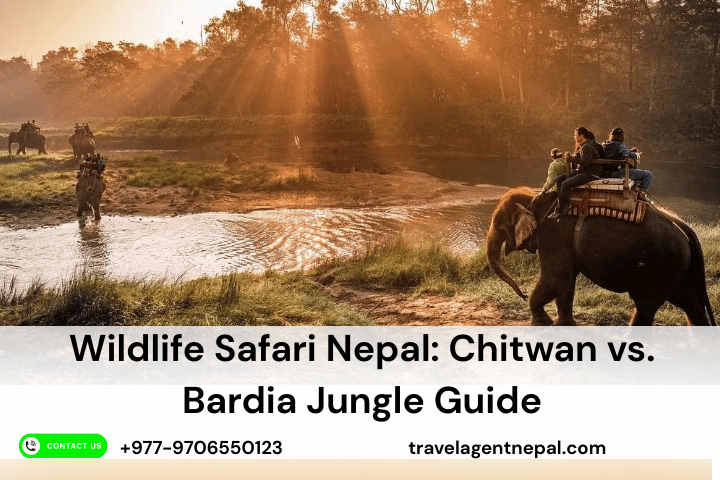
The Big Two: Chitwan vs. Bardia
The most common question we get is: “Which park should I visit?”
While Nepal has several reserves (like Koshi Tappu for birdwatchers), the two titans of wildlife safari Nepal are Chitwan and Bardia.
1. Chitwan National Park: The Accessible Icon
Located just a 20-minute flight from Kathmandu, Chitwan is Nepal’s first national park and a UNESCO World Heritage site.
- Best For: First-timers, families, and those with limited time.
- Wildlife: Guaranteed sightings of the One-Horned Rhinoceros. High chance of sloth bears, gharial crocodiles, and monkeys. Tigers are present but elusive.
- Vibe: Developed, with luxury resorts like Meghauli Serai and Taj Safari offering world-class comfort.
2. Bardia National Park: The Tiger’s Domain
Located in the far west, Bardia is Nepal’s largest undisturbed wilderness.
- Best For: Serious wildlife enthusiasts, photographers, and adventure seekers.
- Wildlife: This is the best place in Asia to spot the Royal Bengal Tiger. The prey density is high, and the jungle is less crowded. You may also see wild elephants and freshwater Gangetic dolphins.
- Vibe: Raw, authentic, and quiet.
Comparison Table: Choosing Your Safari
| Feature | Chitwan National Park | Bardia National Park |
| Accessibility | Easy (20 min flight + 30 min drive) | Moderate (50 min flight + 2 hr drive) |
| Crowd Level | High (Popular) | Low (Exclusive) |
| Tiger Chance | Moderate | Very High |
| Rhino Chance | Guaranteed (Almost 100%) | Moderate |
| Recommended Days | 2 Nights / 3 Days | 3 Nights / 4 Days |
Top Safari Activities
A wildlife safari Nepal is not just about sitting in a jeep. Here is how you explore the jungle:
- Jeep Safari: The classic method. Deep jungle drives take you into the core areas where foot traffic is banned.
- Canoe Ride: Float down the Rapti or Karnali rivers. Watch as silent Mugger and Gharial crocodiles bask on the sandy banks just meters away.
- Jungle Walk: For the brave. Accompanied by two guides with bamboo sticks, you walk the forest trails. This offers the most adrenaline-pumping connection to nature.
- Tharu Cultural Show: The Tharu people are the indigenous guardians of the forest. Their stick dances and culture are integral to the Terai experience.
Logistics: Fly vs. Drive (2026 Update)
Important Travel Advisory: The main highway connecting Kathmandu to Chitwan (Mugling-Narayanghat) is currently undergoing major expansion.
- Road Travel: Can take 7 to 10 hours due to construction and traffic.
- Flight Option: We strongly recommend flying.
- To Chitwan: Fly to Bharatpur Airport (BHR). Flight time: 20 mins.
- To Bardia: Fly to Nepalgunj Airport (KEP). Flight time: 50 mins.
As an IATA-accredited agency, we can issue these domestic flight tickets instantly at the best rates, ensuring you maximize your holiday time. Check availability on our flight booking page.
Best Time to Visit
Timing is everything for a successful wildlife safari Nepal.
- October to March (Dry Season): The weather is pleasant (25°C). Visibility is good, but the grass can be high effectively hiding tigers.
- April to June (Hot Season): The temperature rises (35°C+), but this is the prime time for tigers. The tall elephant grass is cut down by locals, and animals are forced to gather at waterholes to cool off.
- Monsoon (July to September): The jungle is lush and green, but leeches are common, and jeep tracks can be muddy.
B2B Services & Group Customization
Are you an international tour operator or a group leader planning a trip to Nepal?
Pride Nepal Travel and Tours serves as your local DMC (Destination Management Company) partner.
Why Partner With Us?
- Volume Rates: We hold contracts with top jungle lodges (from budget to 5-star luxury).
- Seamless Integration: We combine customized safari packages with Kathmandu heritage tours and trekking logistics.
- Visa Assistance: We guide your clients through the Nepal visa requirements to ensure smooth entry.
Agencies looking for reliable ground handling can contact our B2B team for confidential tariffs.
Conclusion: Answer the Call of the Wild
A wildlife safari Nepal offers a rare glimpse into a world where nature still reigns supreme. Whether you choose the accessible luxury of Chitwan or the raw adventure of Bardia, the experience of locking eyes with a rhino or tracking a tiger’s pugmarks is unforgettable.
At Travel Agent Nepal, we handle the complex logistics—permits, flights, and safe transport—so you can immerse yourself in the wild.
Ready to explore the jungle?
Contact us today to book your safari adventure or explore our exclusive tour package